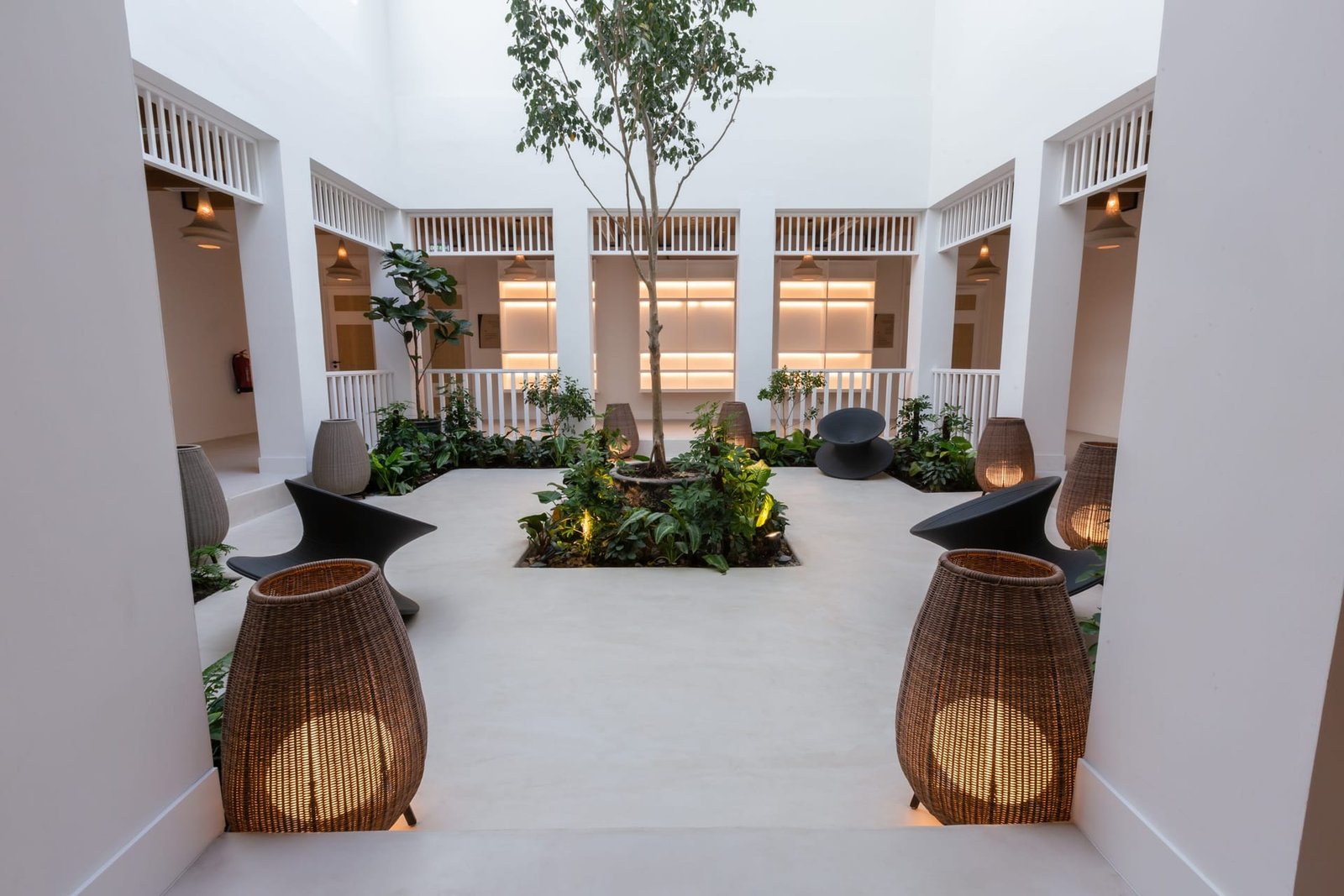
Yes, with limits. Cemher lists interior and exterior use for Microdur Plus and Microtadelakt, covering terraces, facades and exterior floors. Application must happen between 10 and 30 °C, the substrate must be sound and drained, and the sealer decides how the surface behaves under Gulf sun. Pools need Micropool.
What the data sheets list for exterior use
The intended uses on the Microdur Plus sheet read: highly decorative continuous floor coverings, walls and ceilings, interior and exterior; terraces; indoor and outdoor pavements on cementitious substrates. Exterior work is not an off-label stretch of an interior product — it is the declared scope.
The lime-based Microtadelakt range says the same for walls and ceilings, and its Thick Base grade is listed for exterior work at 5 to 15 mm where a facade needs levelling as well as finishing.
One honest exclusion inside the range: Microrock, the C80 high-traffic product, is listed for interior floors and walls only. Not every microcement in the catalogue goes outside, and part of specifying the material is knowing which sheet you are standing on.
The temperature window is the honest limit
Microdur Plus is applied between 10 and 30 °C. That is a limits entry on the data sheet, not a preference, and in the Gulf it is the constraint that shapes the programme. A shaded interior stays inside the window year-round; a west-facing terrace slab in July does not.
What matters is the temperature of the air and the surface while the material is being worked and while it cures. Workability is around 120 minutes at 20 °C, and heat shortens working time for any cementitious material, so summer exterior work is planned for early hours, shaded elevations and the cooler months rather than forced through a heatwave.
This is a scheduling problem, not a disqualification. Riyadh, Jeddah and Doha all offer months of weather comfortably inside the window; the specification simply has to acknowledge the calendar. An applicator who offers to coat a sunlit slab in August heat is telling you something about their relationship with the data sheet.
Sun, sealers and colour
An exterior microcement surface is finished with a sealer, and outdoors the sealer is doing more of the work than it does inside. The solvent-based option, Maxipur, is a two-component aliphatic acrylic polyurethane with high chemical resistance, in matt, satin or gloss; Aquamax is the water-based alternative. Sealing happens 24 to 48 hours after hardening, below 5% moisture, and Maxipur itself wants 12 to 25 °C and humidity under 80% while it goes on.
On colour under Gulf sun we will not oversell. The pigments are mineral, but the data sheets do not publish a UV endurance figure, so we do not invent one. What we do instead is practical: agree the colour on a sample panel made outdoors in the project's own light, and choose the sealer for the exposure. Colour behaviour generally is covered in microcement colours.
Sheen matters more outside than in. High gloss shows dust within a day in this region; matt and satin surfaces live with the environment far more gracefully.
Water, drainage and the pool question
Cemher describes Microdur Plus as waterproof in mass, backed by a tested result of no water penetration under 5 bar of direct pressure over three days. That covers rain, washing down and wet feet. What it does not replace is drainage: an exterior floor still needs falls, and water that is designed to stand on a surface is a different duty from water that passes over it. The claim is unpacked in is microcement waterproof.
The line the data sheet draws is immersion. Microdur Plus is not suitable for swimming pools or continuously immersed surfaces; that duty belongs to Micropool, which carries the immersion testing and is also listed for pool surrounds and wet decks. The distinction is the subject of microcement pools.
Around water rather than in it, the material has a track record. The courtyard at Maysan LXR in Doha and the pool surround at the OQ Hotel are both exterior microcement surfaces living outdoors in the Qatari climate.
Terraces and facades in practice
The strongest case for exterior microcement is continuity. A terrace coated in the same material and colour as the floor inside reads as one plane through the glass, with no threshold strip and no change of joint pattern — the indoor-outdoor arrangement most Gulf villas and hotels are drawn around. The interior half of that story is in microcement floors.
On facades and exterior walls the material behaves as a thin continuous render with a mineral surface, over sound cementitious backgrounds. The substrate rules do not relax outdoors: consolidated, clean, true, with movement joints in the background respected and carried through rather than coated over.
Slip is a fair question for any smooth exterior floor. The tested value for the system is USRV 41, Class 2, and the practical adjustments outdoors are the grain of the finish coats and a matt sealer rather than a polished, glossy build. Wet barefoot zones deserve a franker conversation about texture, and we will have it rather than gloss over it.
Where we would say no
Inside a pool or any permanently immersed surface with anything other than Micropool — the Microdur Plus sheet excludes it in plain words, and we keep to the sheet.
Application outside the 10 to 30 °C window, which in practice means no mid-summer, mid-day exterior programmes. The material's limits do not negotiate with a completion date.
Over an unsound, undrained or cracking substrate. An exterior slab that pools water or is still moving will defeat any coating, and honest exterior work starts with falls and substrate repair, not with colour samples. Cracking and its causes are treated in does microcement crack.
Specifying exterior microcement in Saudi Arabia
Conmarble supplies and installs Cemher microcement across Saudi Arabia and the wider Gulf, indoors and out, with applicators on our own payroll and completed exterior work standing in Doha's climate as the reference.
For a terrace, courtyard or facade, the useful first exchange is drawings, orientation and exposure, plus a word about the season you intend to build in. We will answer with a system, a programme that respects the temperature window, and an outdoor sample panel.
Reach us through the enquire page or on WhatsApp at +966 56 808 8273. Wellness, in Every Surface.