At a glance
Best for
Walls, including bathrooms and showers as a sealed system
Not for
Floors
Wet areas
Yes — as the complete sealed system, never the plaster alone
The material
Lime plaster is one of the oldest wall finishes still in normal use, and it survives because of how it behaves rather than how it looks. It sets slowly, stays mineral, and takes colour into the body of the material instead of onto its surface.
Microtadelakt is Cemher’s lime-based interpretation of tadelakt. It carries the same polished, seamless character — no joints, no grout lines, movement and depth across a whole wall — but is applied thin, over a prepared substrate, and reaches its water resistance through a specified build-up rather than through prolonged burnishing and soap treatment.
That matters on a live programme. Traditional tadelakt is slow, and its performance depends heavily on the hand that applies it. Microtadelakt is specified as a system, with a technical data sheet behind each layer, which is what makes it viable across a museum atrium or a hotel spa rather than a single feature wall.
Applied without joints or grout lines, so a wall, its returns and its soffit read as one surface. This is what makes it suited to arched and curved work, where a tiled or panelised finish would have to be cut.
Cemher publishes VOC emission and content certificates for Microtadelakt, tested to the standards named in the report. We would rather hand you the certificate than offer an adjective about the product’s health credentials.
View evidence — VOC emissions certificate (PDF, 0.8 MB)Specified for bathrooms, showers and spa areas as a complete build-up — primer, base, body coats and sealer. The water resistance belongs to the system and its sealer, not to the plaster on its own, and the sealer is a maintenance item.
View evidence — Microtadelakt technical data sheet (PDF, 0.9 MB)Cemher provides documentation supporting LEED, WELL, BREEAM and Mostadam submissions. The products contribute to credits; they are not themselves certified, and the Cemher LEED file is a beta attestation of contribution.
View evidence — LEED v4.1 contribution attestation (PDF, 0.8 MB)Pigment is carried in the material rather than applied over it, so wear exposes more of the same colour instead of a different substrate beneath. Range and finish are selected against an approved sample panel.
View evidence — Microtadelakt colour and range sheet (PDF, 1.8 MB)Damage is made good by re-working the affected area and re-sealing, rather than by replacing a panel or a run of tile. Joins are easier to lose in a textured finish than in a polished one.
Microtadelakt in place
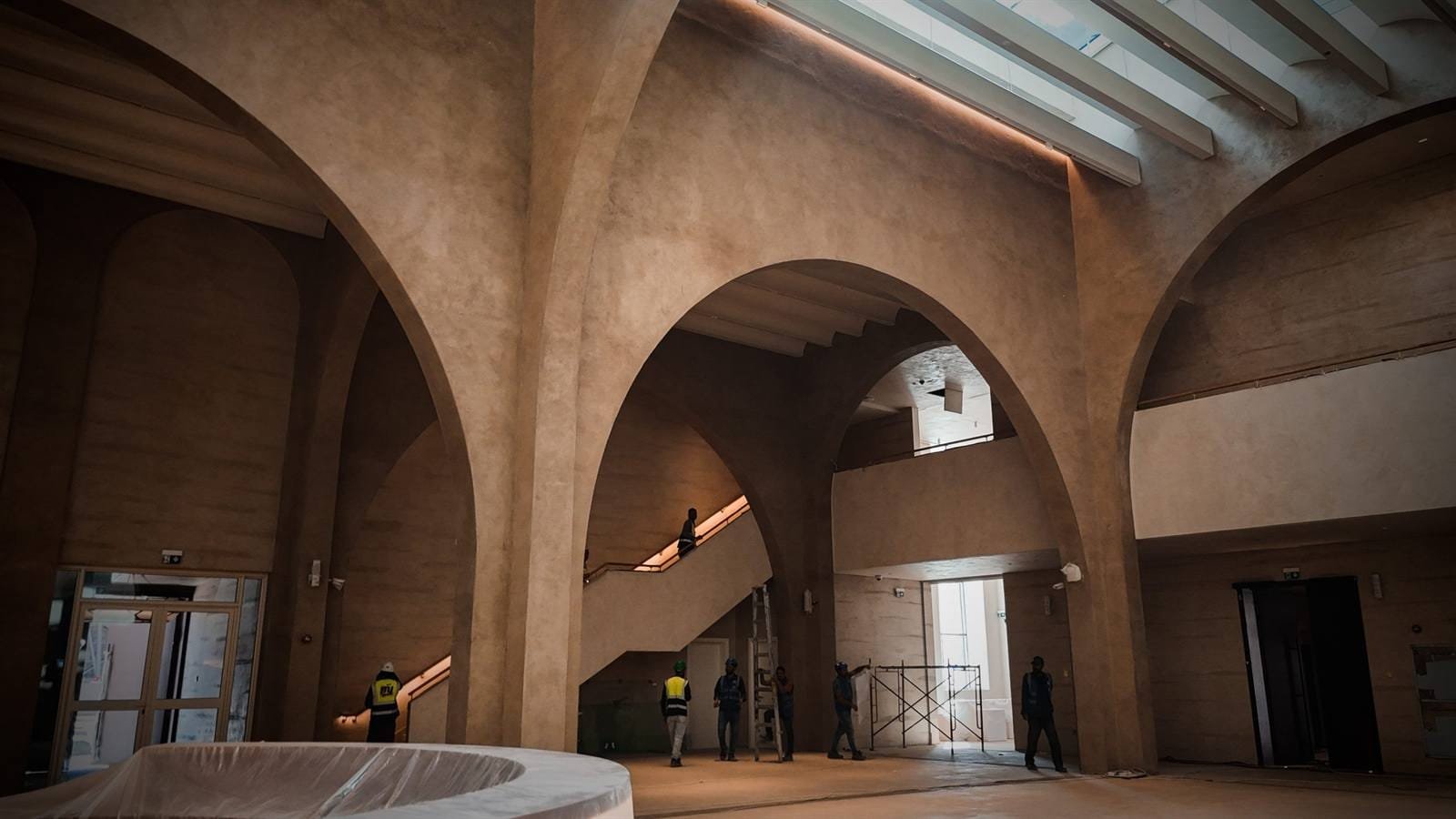
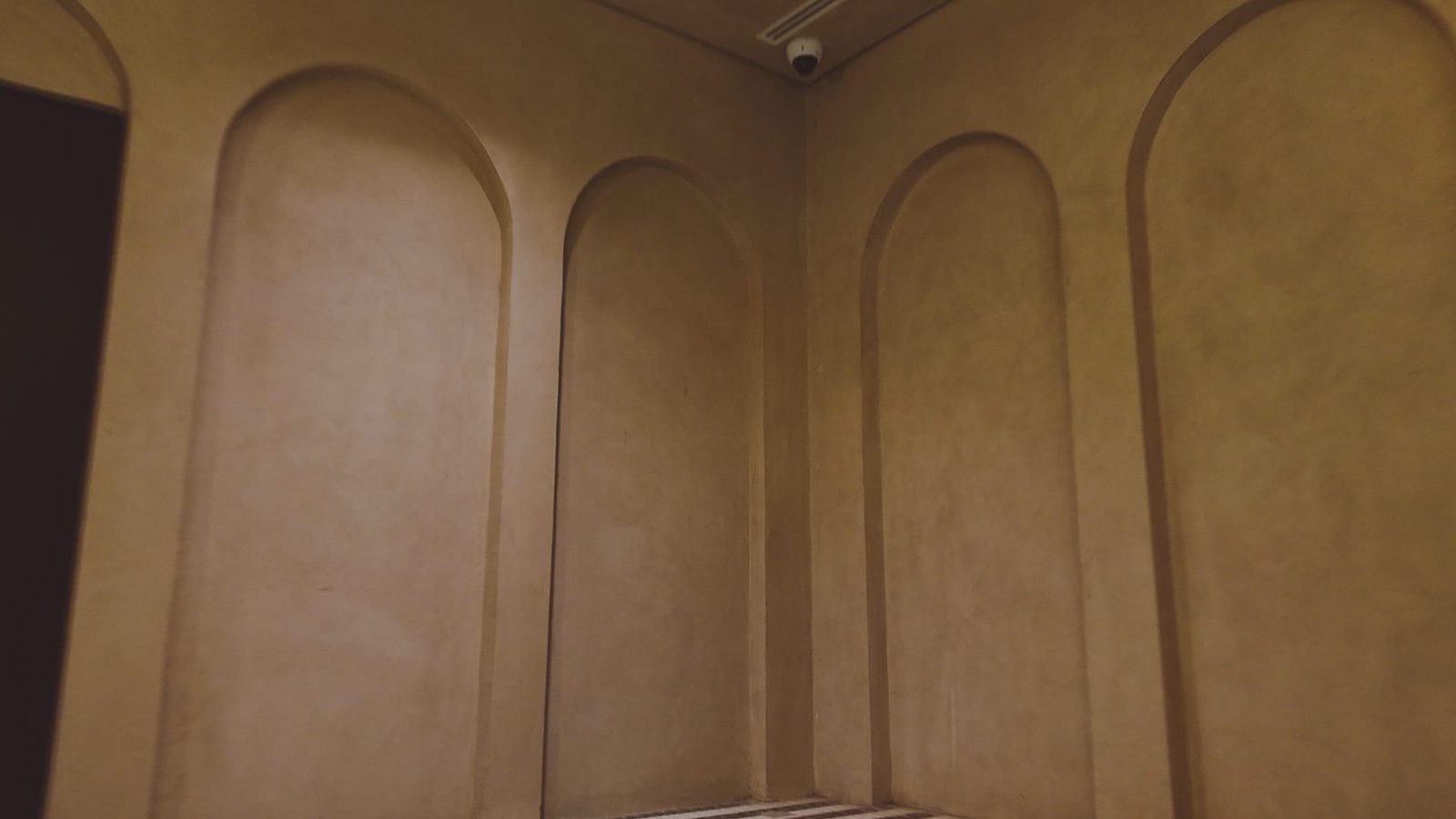
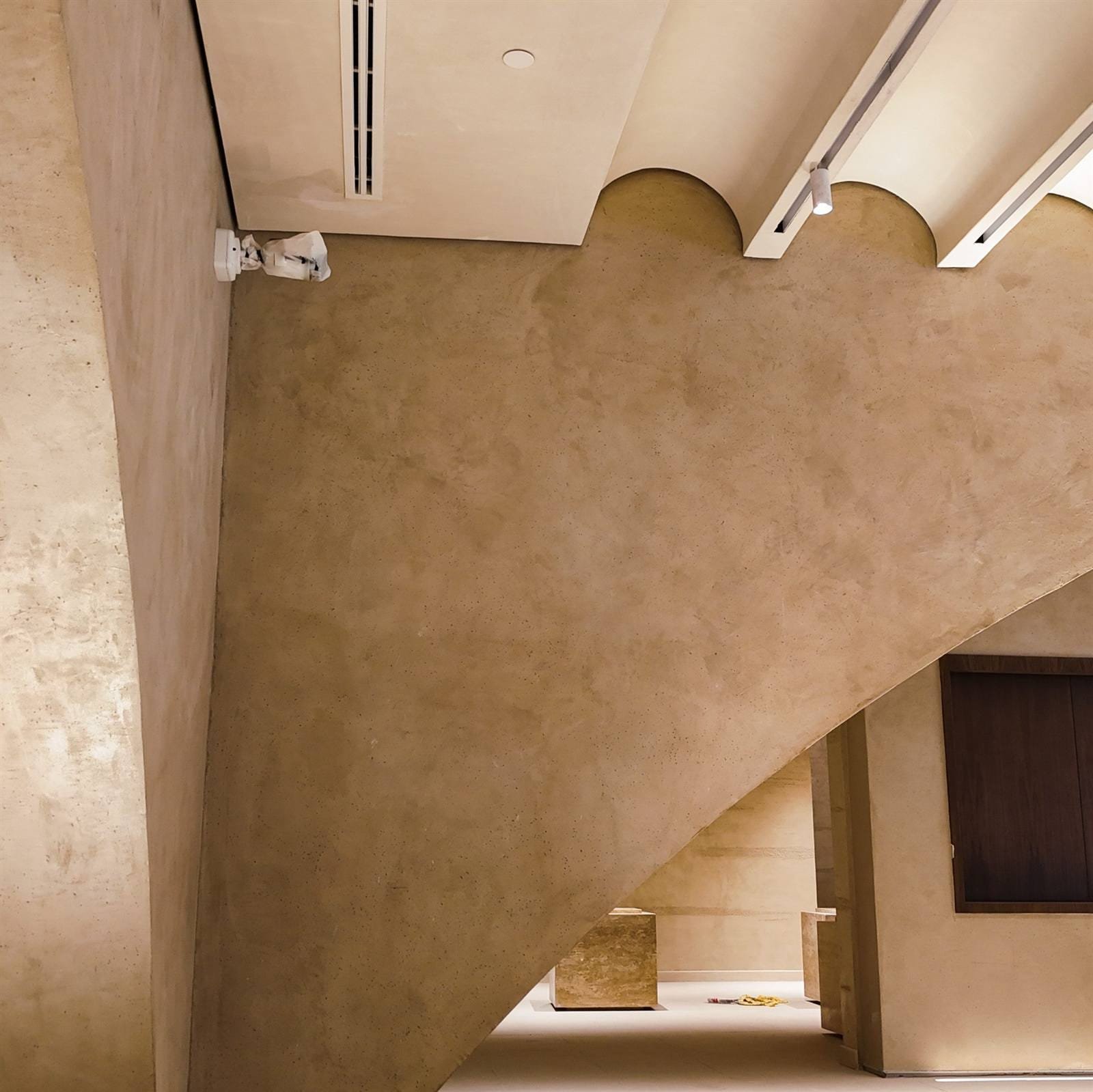
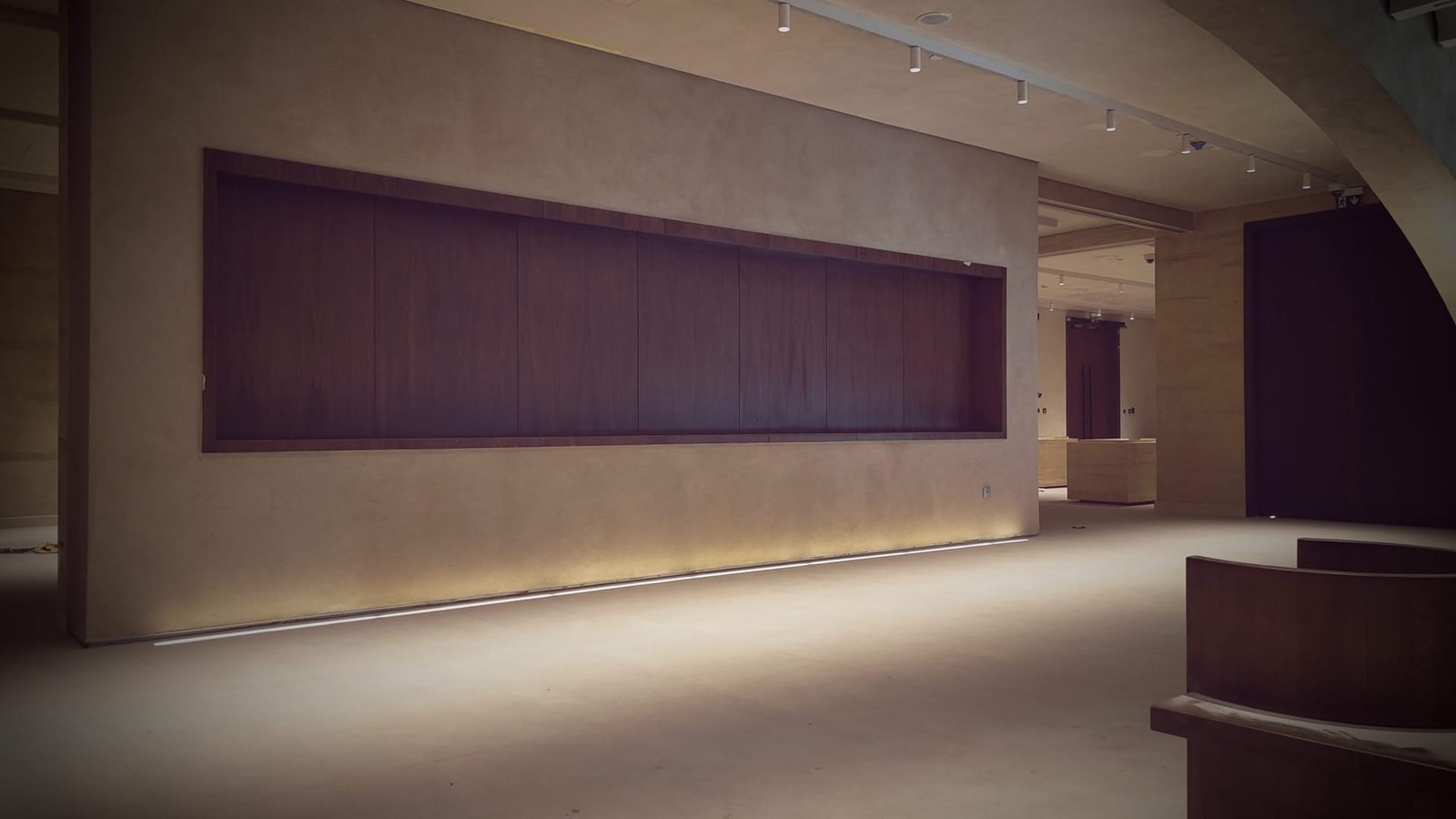
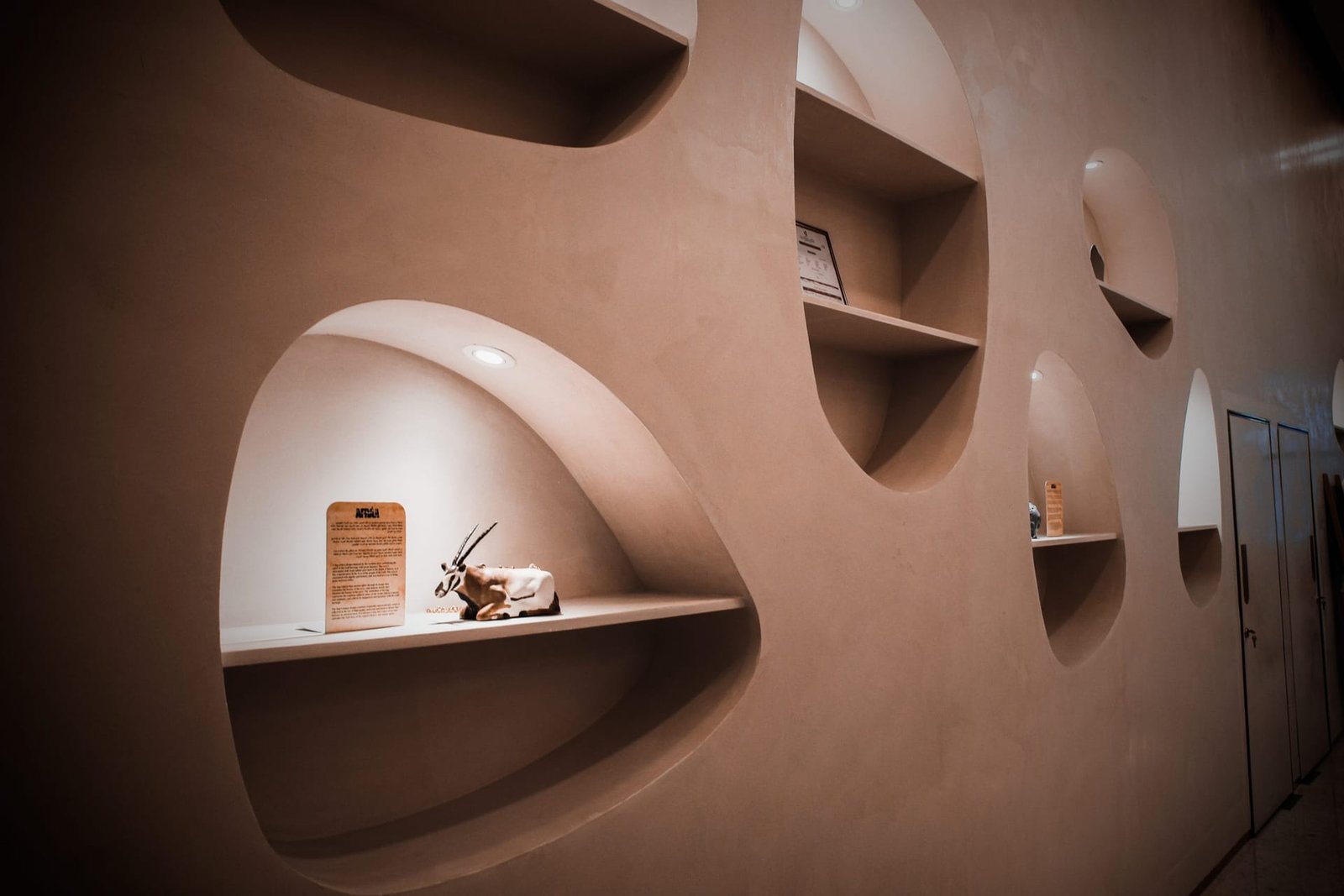
The Calligraphy Museum in Madinah is the clearest reference for this material at scale: arched halls, stair soffits and gallery walls in one continuous finish. Photography: Conmarble.

Where it is specified
- Interior walls, soffits and curved or arched work, where a seamless surface is the point
- Bathrooms, showers and spa areas, as a sealed system with the specified primer and sealer
- Hospitality and retail interiors that need a hand-applied finish able to take traffic
- Museums and cultural buildings, where large continuous wall planes are unavoidable
- Reception and circulation areas, with the sealer selected for the expected cleaning regime
Specify it
| Applied thickness | Approximately 1 to 3 mm, over a sound, prepared substrate |
|---|---|
| Build-up | Primer, thick base where levelling is required, two body coats, sealer |
| Wet areas | Specified as a sealed system; sealer selection and re-application are maintenance items |
| Colour | Selected from the Microtadelakt range against an approved sample panel |
| Substrate movement | Structural and movement joints must be carried through the finish |
Lime plaster: Cemher Microtadelakt lime-based polished plaster, applied at approximately 1 to 3 mm to the areas scheduled, over the manufacturer's primer and thick base where levelling is required. Two body coats finished to the approved sample panel, sealed with the specified sealer. In wet areas the complete system build-up is to be applied as the technical data sheet requires. Structural and movement joints to be carried through the finish. Supply and installation by Conmarble Natural Finishes.
Square brackets mark the choices that belong to the project. Send us the finishes schedule and we will return the clause completed, with the sample and mock-up programme against it.
Featured projects
Built with this material, by our own artisans. Open the project for the full set of photographs and the story of the installation.
Questions specifiers ask
Short answers, restating what this page already sets out. The specification pages carry the data behind each one.
Can lime plaster be used in bathrooms and showers?
Yes, on walls, as a sealed system — never as the plaster alone. Microtadelakt is specified for bathrooms, showers and spa areas as a complete build-up of primer, base, body coats and sealer. The water resistance belongs to the system and its sealer rather than the plaster itself, and the sealer is a maintenance item that is re-applied over time. The finish is for walls, not floors.
How thick is Microtadelakt lime plaster applied?
Microtadelakt is applied at approximately 1 to 3 mm over a sound, prepared substrate. The build-up is primer, a thick base where levelling is required, two body coats and a sealer. Because it is applied thin and without joints or grout lines, a wall, its returns and its soffit read as one continuous surface, which suits arched and curved work.
What is the difference between Microtadelakt and traditional tadelakt?
Microtadelakt is Cemher's lime-based interpretation of tadelakt. It carries the same polished, seamless character — no joints, no grout lines — but is applied thin over a prepared substrate, and its water resistance comes from a specified build-up rather than prolonged burnishing and soap treatment. Traditional tadelakt is slow and depends heavily on the applicator's hand; Microtadelakt is specified as a system with a technical data sheet behind each layer.
Where can Microtadelakt lime plaster be used?
On interior walls, soffits and curved or arched work where a seamless surface is the point; in bathrooms, showers and spa areas as a sealed system with the specified primer and sealer; in hospitality and retail interiors that need a hand-applied finish able to take traffic; in museums, cultural buildings and reception areas. It is not used on floors. Delivered projects include the Calligraphy Museum, Madinah and Afraa Boutique, Lusail.
How is Microtadelakt maintained and repaired?
The sealer is the maintenance item: in wet areas the finish is specified as a sealed system, and sealer selection and re-application are part of upkeep, with the sealer chosen for the expected cleaning regime. Damage is repairable in place — the affected area is re-worked and re-sealed rather than replacing a panel or a run of tile. Pigment sits in the body of the material, so wear exposes more of the same colour.
Technical support for the design team
We supply the material and we apply it, so the specification and the workmanship sit with one party. Send a finishes schedule, an elevation or a mood board and we will come back with the system, the build-up, the sample programme and a completed clause.