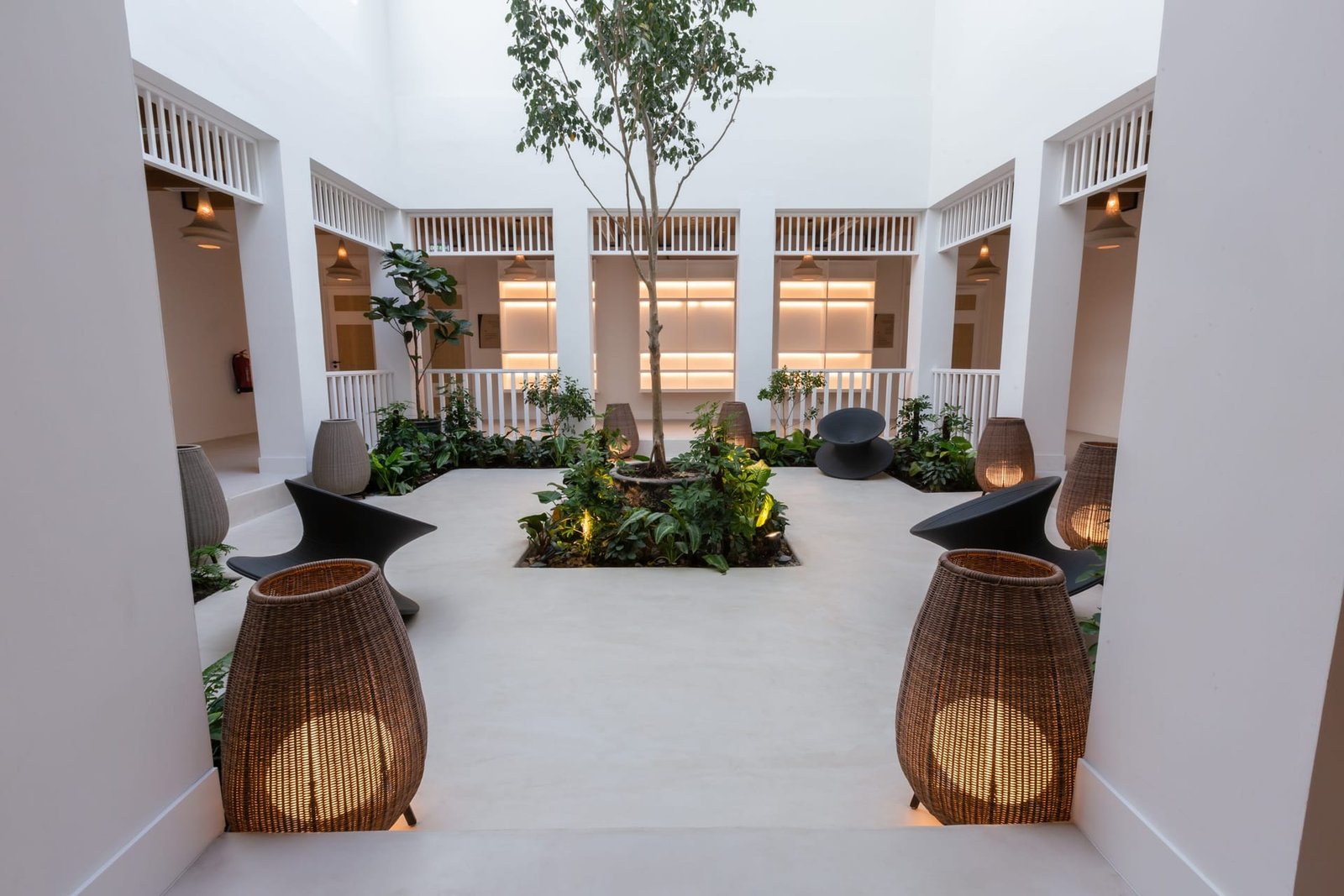
Microcement colour is pigmented into the material, not painted on, so the tone runs through the coat and every surface is mixed to order. Texture comes from grain size and trowel work, sheen from a matt, satin or gloss sealer. In strong Gulf light, approve a sample panel in the real room first.
Where microcement colour comes from
The Cemher systems start as a white or neutral base — Microdur Plus is a white powder mixed with two resins — and mineral pigment is added to the mix itself. The colour therefore runs through the coat rather than sitting on top of it as a paint film.
Pigmented in mass means the finish coats carry the tone at full depth, and a surface scuff meets more of the same material rather than a different colour underneath. It also means colour is mixed to order per project rather than picked from a shelf.
What the pigment cannot do is make the surface uniform like a sprayed panel, and it should not. Hand application leaves soft clouding and tonal movement that is the signature of the material. A client who wants perfect uniformity wants a different product — that conversation is better had early, and what is microcement is where it starts.
Texture: grain size and the trowel
Texture is specified before it is applied. Microrock and Micropool come in Fine, Medium, Base and Thick Base grains; Microdur Plus in Regular and Base. Fine grains close up into a smooth, almost stone-like surface; coarser grains keep an open mineral tooth that reads strongly in raking light.
The trowel then decides how the grain is expressed. Tight, flat passes quieten the surface; more open working leaves visible movement. The same bucket of material can produce a calm plane or a lively one, which is why the applicator matters as much as the product — ours are on our own payroll for exactly this reason.
Floors and walls pull the choice in different directions: floors tend toward finer, flatter surfaces for cleaning and traffic, while walls can afford more texture. Both sides are covered in microcement floors and microcement walls and ceilings.
Sheen: the sealer has the last word
The final visual decision is the sealer, and it is a genuine colour decision, not a technicality. The Maxipur polyurethane range comes in matt, satin and gloss, and the same pigmented coat reads noticeably darker and deeper under gloss than under matt.
Matt is the default for most contemporary Saudi interiors: it keeps the mineral, stone-like character and hides fine wear. Satin adds a little depth; gloss maximises colour saturation and reflectivity at the cost of showing more of daily life.
Because the sealer shifts the tone, colour approval must happen on a sealed sample, never on raw material. A tone signed off unsealed will read a step darker on handover, and that surprise is entirely avoidable.
Colour in Gulf light
Gulf daylight is strong and warm, and it does not treat colour charts kindly. A grey that looks neutral on a swatch in London light can pull warm and sandy across a full Riyadh wall at five in the afternoon; a warm white can bleach to nothing at noon. The same wall rarely looks like the same colour morning and evening.
Scale amplifies everything. A tone that reads restrained at A5 size gains intensity across an uninterrupted six-metre plane, and microcement schemes are typically built from exactly such planes. The larger the surface, the lighter and quieter the safe choice tends to be.
Interior light matters as much as sun. In hospitality work, warm artificial lighting schemes shift neutral tones towards beige after dark — visible in the courtyard and dining spaces at Maysan LXR in Doha, where the microcement holds its character across both regimes because it was sampled under both.
Sampling discipline: the panel decides
The rule we hold to across every finish we install: no colour is approved from a screen, a photograph or a catalogue. A physical sample panel, made with the specified grain and the specified sealer, viewed in the real light of the real room, is what gets signed.
The panel settles colour, texture, sheen and expectation of movement in one visit, and it becomes the acceptance reference for the finished work — the surface either matches the approved panel or it does not. That protects client and applicator equally.
Batching discipline follows from the same logic. Colour is mixed to order, so quantities are planned per continuous surface, and a later phase gets its own confirming sample rather than an assumption that the mix will match. Samples can also be seen at our Riyadh showroom by appointment — details on showroom.
Choosing between microcement and the natural palettes
Microcement's palette logic is shared with our natural finishes — mineral pigment, tone through the material, hand application — but the materials age differently. Clay can be re-wetted and reworked; a sealed cementitious coat is repaired by an applicator and resealed. Colour longevity in both cases is mineral, not organic.
If the brief is a soft, breathing, natural wall in a dry room, the honest recommendation may be clay plaster or a limewash — compared directly in microcement vs limewash. If the brief is one tone running from floor to shower wall, microcement is the only member of the family that can obey it.
The full range of materials and finishes, with photography from completed projects, sits on materials and projects.
Specifying microcement colour in Saudi Arabia
Conmarble supplies and installs the Cemher systems across Saudi Arabia, and colour development is part of the service: sample panels in the specified grain, colour and sealer, made for approval in the project's own light. Technical data sits on microcement.
Bring the interior lighting design to the sampling conversation, not just the paint references — it changes outcomes more often than clients expect.
Send references, drawings and the finishes schedule through the enquire page, or message the Riyadh office on WhatsApp at +966 56 808 8273. Wellness, in Every Surface.